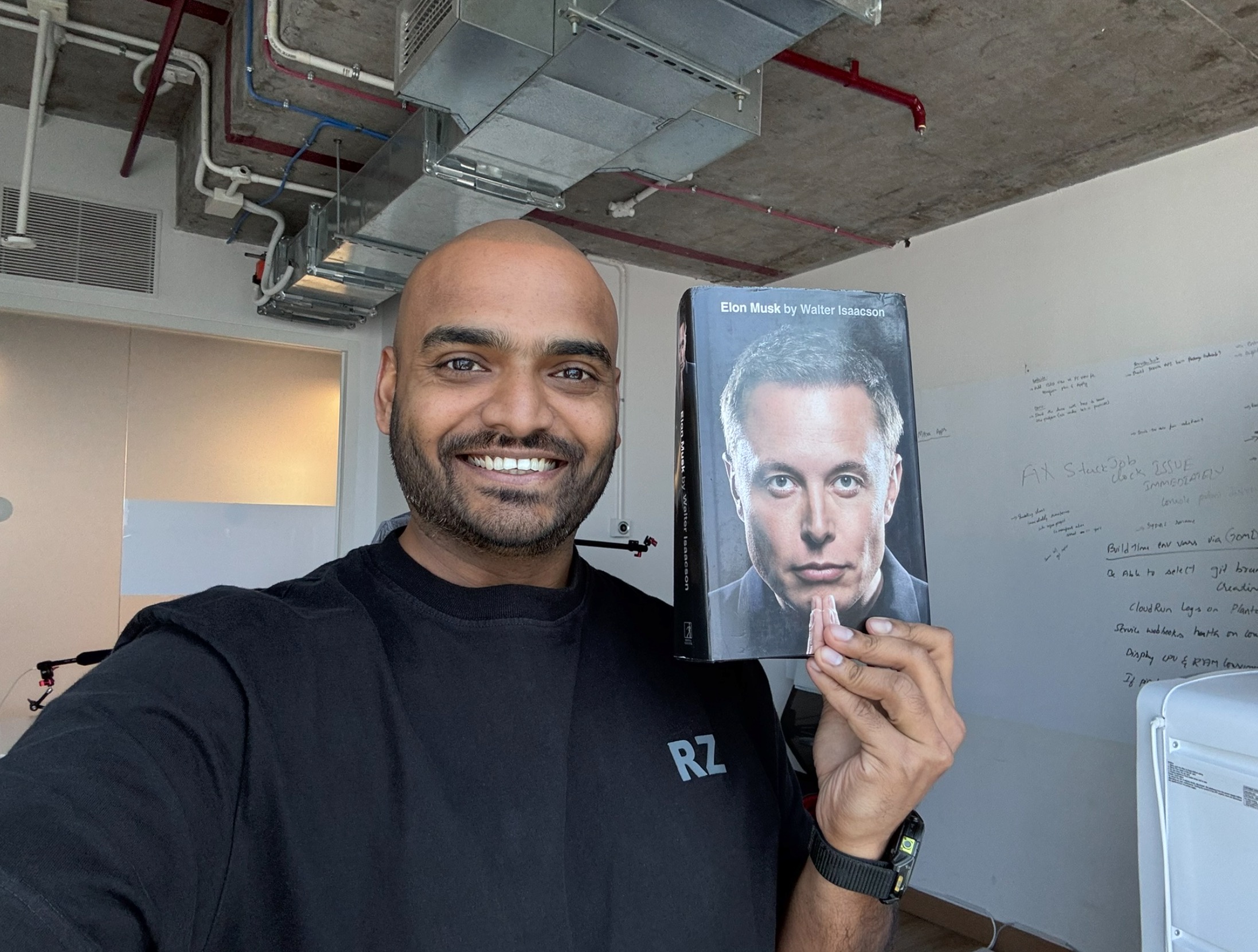
What I Learned From Reading Elon Musk's Biography
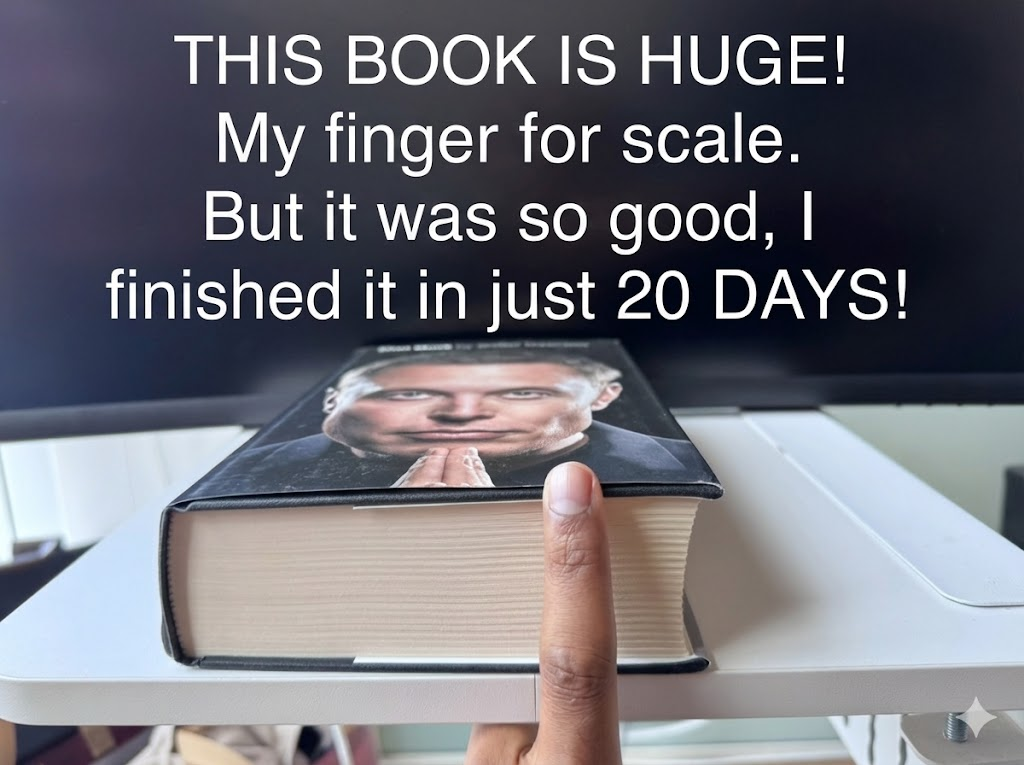
I just finished reading Walter Isaacson's biography of Elon Musk. All 615 pages of it. In 20 days.
This isn't a book review. This is about how reading one book can completely rewire how you see the world, what you think is possible, and what you're aiming for.
The Book That Changes Your Trajectory
Some books you read for entertainment. Some for information. And then there are books that fundamentally shift your perspective on what's possible. This is one of those rare books that I know will change the trajectory of my life.
Elon Musk first stepped into the US in 1995. Thirty years later, he's revolutionized multiple industries simultaneously. There's no human who has accomplished what he has in one lifetime, let alone 30 years. And I found comfort in learning that there's greatness in being that ambitious.
Question Everything: Why Be a Delivery Vehicle When You Can Be the Hotel?
While reading this book, I had a realization about Planton Cloud. I was aiming too small.
My original goal was to create a delivery vehicle that takes software from developers and deploys it to the cloud. A noble goal, but then "The Algorithm" section of the book—specifically the "Question Everything" principle—made me pause.
Why does there need to be an external delivery vehicle at all? Why aren't cloud providers offering this themselves? It would be far more convenient and authentic if the hotel offered pickup and drop-off service directly.
Instead of just hoping they would do it, I started questioning: why can't I be the cloud provider?
That goal seemed grander and more valuable. So I decided that Planton isn't going to stop at being the delivery vehicle—it's going to be the hotel itself. Planton is going to be another cloud provider choice for customers, truly justifying the name "Planton Cloud."
Is it audacious? Absolutely. But it seems tiny when compared to Elon choosing to build rockets after selling his first software company.
Four Key Principles That Hit Different
1. Always Think From First Principles
I'd encountered this concept before in "The Almanack of Naval Ravikant" last month, but I didn't fully embrace it. When it surfaced again in Elon's story, I finally understood it deeply. I fell in love with the concept.
First principles thinking means breaking down complex problems to their fundamental truths and reasoning up from there. I realized I've done this to some degree, but not nearly enough.
2. Delete, Delete, Delete
Delete everything that is absolutely not necessary. If you don't put back at least 10% of what you deleted, then you haven't deleted enough.
This is a powerful addition to the YAGNI (You Aren't Gonna Need It) principle I recently adopted. While YAGNI helps you avoid adding unnecessary stuff, Musk's deletion principle takes care of stuff that's already made its way in but isn't necessary.
These two principles together have been helping me build a much leaner and faster Planton. I've already deleted a bunch of code that hasn't been touched in a long time. The value is immediately visible.
3. Maniacal Urgency
Thirty years. That's all the time Elon has been in the US. In that span, he's accomplished what no human has accomplished in an entire lifetime.
At the center of that is his sense of "maniacal urgency." I reflected and compared it to my own sense of urgency and immediately recognized a gap. I can create exponentially more value if I shift gears.
4. Build Smart Teams
I found myself complaining about how difficult it is to build one startup with one kid. Here's someone who built multiple companies simultaneously while being a father to a gazillion kids.
He made it possible by identifying and attracting the smartest people around him and pushing them to their limits. It helped me recognize that creating highly concentrated small teams filled with smart people is the only way to scale myself—to accomplish more in life while still having a life.
The Excuse Killer
The biggest gift this book gave me? It killed my excuses.
I can't complain about the difficulty of building a startup with a young kid when someone else built multiple world-changing companies with many kids. I can't say something is "too ambitious" when someone chose to build reusable rockets instead of retiring comfortably after PayPal.
The bar for what's possible is so much higher than I thought.
A Thank You to Walter Isaacson
This is a book I'll return to. A book I'll recommend without hesitation. A book that captures the life of a man who's too busy changing the future of humanity to write his own story.
Thank you, Elon, for showing us what's possible when you combine first principles thinking, relentless deletion of waste, maniacal urgency, and world-class teams.
And thank you, Walter Isaacson, for capturing this incredible journey so the rest of us can learn from it.
If you're a founder, builder, or someone who wants to do something significant with your life, read this book. Not for inspiration—for recalibration.
Images From the Book